
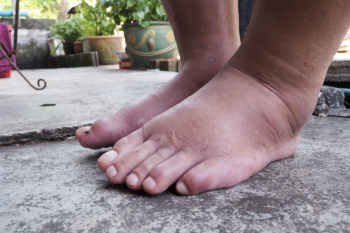
Swollen feet develop when extra fluid collects in the tissues or inflammation follows an injury. Shoes might feel tighter, and the skin may look stretched or shiny. Some people notice swelling after a long workday, while others develop it suddenly. Standing or sitting for extended periods of time allows fluid to collect in the lower legs and feet. Long trips create similar conditions because the leg muscles move less. Pregnancy also increases fluid retention and places pressure on veins that return blood toward the heart. A podiatrist evaluates the pattern of swelling to help identify its source.
Injuries are another reason feet swell. An ankle sprain damages the bands that support the joint, while a fracture breaks a bone. Both trigger inflammation that produces swelling and pain. Repeated stress also irritates tendons, the strong tissues that connect muscles to bones. Arthritis causes swelling around affected joints and sometimes limits movement. Gout, a type of arthritis caused by crystal buildup in a joint, often affects the big toe. An infected wound also produces swelling, sometimes with warmth or redness. A podiatrist examines these changes and checks for injuries or infection.
Swelling sometimes points to a problem beyond the foot itself. Weak valves in leg veins allow blood to collect instead of moving efficiently toward the heart. Problems with the body's fluid drainage system also cause persistent puffiness. Heart, kidney, or liver disease affects fluid balance and sometimes leads to swelling in both feet. Certain medicines contribute to fluid retention as a side effect. A podiatrist reviews the patient's health history and current prescriptions when investigating unexplained swelling. The examination includes checking skin condition, circulation, and sensation. Depending on the findings, the podiatrist orders imaging or coordinates further testing with another medical professional.
Treatment depends on the cause of the swelling. A podiatrist treats foot injuries with appropriate support or immobilization, which limits movement while tissues heal. Care also includes treating wounds and addressing joint problems. For swelling related to vein problems, the podiatrist assesses circulation before recommending medical compression. Referral helps patients receive care for conditions affecting other organs. Sudden, unexplained swelling in one foot or leg requires urgent medical assessment because a blood clot is possible. Redness with fever also warrants urgent attention. Swelling accompanied by chest pain or shortness of breath requires emergency care. If you have swollen feet or ankles, it is suggested that you schedule an appointment with a podiatrist for a diagnosis and appropriate treatment.
Swollen feet can be a sign of an underlying condition. If you have any concerns, contact Massimo Pietrantoni, DPM of Rochester Podiatry, LLP. Our doctor can provide the care you need to keep you pain-free and on your feet.
Swollen feet are a common ailment among pregnant women and people who stand or sit for extended periods. Aging may increase the possibility of swollen feet and patients who are obese often notice when their feet are swelling too. There may be medical reasons why swollen feet occur:
Swollen feet can also be caused by bone and tendon conditions, including fractures, arthritis, and tendinitis. Additionally, there may be skin and toenail conditions and an infection may cause the feet to swell. Patients who take medicine to treat high blood pressure may be prone to getting swollen feet.
Many patients elevate their feet to help relieve the swelling and this is generally a temporary remedy. When a podiatrist is consulted the reason behind the swelling can be uncovered and subsequently treated.
If you have any questions please contact one of our offices located in Brighton, NY . We offer the newest diagnostic and treatment technologies for all your foot and ankle needs.


 accessibility - Default
