



Your feet are covered most of the day. If you're diabetic, periodic screening is important for good health. Numbness is often a sign of diabetic foot and can mask a sore or wound.

 “Hyperhidrosis,” or excessive sweating, can impact the feet. Feet can sweat for a variety of reasons, such as heat, vigorous exercise, pregnancy, shoes that do not fit properly, stress, overuse of feet, side effects of certain medications, or an underlying medical condition like diabetes or thyroid disease. When foot sweat is not cleaned up it can get trapped between toes, which can allow bacteria to grow and enter a cut or ingrown toenail, become infected, and lead to smelly feet (also known as “Bromodosis”). It makes good sense to wash and dry the feet regularly, as well as to wear proper footwear. Additional at home remedies can include foot powders and antiperspirants or medicated insoles. People more apt to develop these types of foot infections are seniors, diabetics, those undergoing hormonal changes (like in pregnancy), and those with compromised immune systems. Such infections must be tended to immediately. If your feet continue to sweat and smell and regular foot hygiene measures do not solve the problem, or if you notice an infection festering, a visit to a podiatrist is suggested for proper diagnosis, a better understanding of the root cause of the problem, and more aggressive treatment.
If you are suffering from hyperhidrosis contact Massimo Pietrantoni, DPM of Rochester Podiatry, LLP. Our doctor can provide the care you need to attend to all of your foot and ankle needs.
Hyperhidrosis of the Feet
Hyperhidrosis is a rare disorder that can cause people to have excessive sweating of their feet. This can usually occur all on its own without rigorous activity involved. People who suffer from hyperhidrosis may also experience sweaty palms.
Although it is said that sweating is a healthy process meant to cool down the body temperature and to maintain a proper internal temperature, hyperhidrosis may prove to be a huge hindrance on a person’s everyday life.
Plantar hyperhidrosis is considered to be the main form of hyperhidrosis. Secondary hyperhidrosis can refer to sweating that occurs in areas other than the feet or hands and armpits. Often this may be a sign of it being related to another medical condition such as menopause, hyperthyroidism and even Parkinson’s disease.
In order to alleviate this condition, it is important to see your doctor so that they may prescribe the necessary medications so that you can begin to live a normal life again. If this is left untreated, it is said that it will persist throughout an individual’s life.
A last resort approach would be surgery, but it is best to speak with your doctor to find out what may be the best treatment for you.
If you have any questions please feel free to contact one of our offices located in Brighton, NY . We offer the newest diagnostic and treatment technologies for all your foot and ankle needs.
Each foot, on average, has about 250,000 eccrine sweat glands that produce half a pint of sweat each day. Sweating is a natural and important bodily function. It regulates the body’s temperature by cooling the skin so that it does not overheat. In individuals with hyperhidrosis, the sympathetic nervous system works in "overdrive", producing far more sweat than what is required. People with plantar hyperhidrosis experience an excess amount of sweat on their feet. It is estimated that 2% to 3% of all Americans suffer from some form of hyperhidrosis. This condition is often caused by neurologic, endocrine, infectious, and other systemic disease. Other factors that may trigger the condition are heat and emotions.
People with hyperhidrosis may notice an overabundance of sweat on their feet, along with a strong odor. The feet may also have a wet appearance coupled with infections such as athlete’s foot or toenail fungus. The sweat may even appear in low temperatures, such as during the winter months. People with plantar hyperhidrosis often need to change their socks several times throughout the day.
The specific cause of hyperhidrosis is unknown, and many believe it may be caused by over-activity. However, others believe the condition is genetic. Caffeine and nicotine are known to cause excitement and nervousness which are two emotions that may make the condition worse.
If you are looking to treat your hyperhidrosis the most important thing you should do is wash your feet every day. You may even need to wash your feet twice a day, if necessary. You should also make sure you are wearing the right socks. Wool and cotton socks are both known to be good for ventilation, meaning they allow the feet to breathe. You should avoid socks made from nylon which trap moisture and lead to sogginess. Other common treatment options are over-the-counter antiperspirants that contain a low dose of metal salt. In some cases, prescription strength antiperspirants that contain aluminum chloride hexahydrate may be necessary. In severe cases, surgery may be required.
Untreated hyperhidrosis can easily lead to complications. Some complications that may arise from the disorder include nail infections, warts, and bacterial infections. Consequently, it is important that you seek treatment from your podiatrist if you suspect that you may have plantar hyperhidrosis.

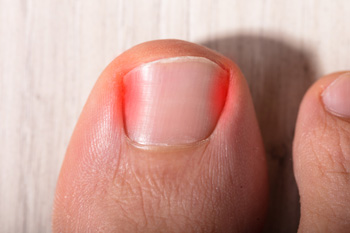 A noticeable sign that an ingrown toenail has developed is pain and redness at the edge of the skin next to the nail. It is defined as the nail growing into the surrounding skin, and if it becomes infected, there may be a pus or discharge. This condition may develop as a result of wearing shoes that do not fit correctly, or from an injury that has happened to the toe. Additionally, sporting activities that consist of abrupt stopping and repetitive pushing off the feet may also lead to an ingrown toenail forming. Some patients have found relief by soaking the affected foot in warm water and gently using a cotton swab to pull the skin away from the nail. This may not always be effective. If you have infected or recurring ingrown toenails, it is suggested that you seek the counsel of a podiatrist who can properly treat this ailment.
Ingrown toenails can become painful if they are not treated properly. For more information about ingrown toenails, contact Massimo Pietrantoni, DPM of Rochester Podiatry, LLP. Our doctor can provide the care you need to keep you pain-free and on your feet.
Ingrown Toenails
Ingrown toenails occur when a toenail grows sideways into the bed of the nail, causing pain, swelling, and possibly infection.
Causes
Prevention
Because ingrown toenails are not something found outside of shoe-wearing cultures, going barefoot as often as possible will decrease the likeliness of developing ingrown toenails. Wearing proper fitting shoes and using proper cutting techniques will also help decrease your risk of developing ingrown toenails.
Treatment
Ingrown toenails are a very treatable foot condition. In minor cases, soaking the affected area in salt or antibacterial soaps will not only help with the ingrown nail itself, but also help prevent any infections from occurring. In more severe cases, surgery is an option. In either case, speaking to your podiatrist about this condition will help you get a better understanding of specific treatment options that are right for you.
If you have any questions please feel free to contact one of our offices located in Brighton, NY . We offer the newest diagnostic and treatment technologies for all your foot and ankle needs.
An ingrown toenail is a toenail that grows sideways into the nail bed, causing pain and swelling. Ingrown toenails can worsen and cause drainage, turning into a serious infection.
Several factors affect whether a person is at risk from an ingrown toenail. The many causes include being overweight, diabetes, participating in sports, having a fungal infection of the toe, and cutting your nails too short. Ingrown toenails also have a genetic predisposition, causing some people to be more prone to receive the condition than others. Other causes include improperly fitting shoes and shoes that keep the feet damp.
Ingrown toenails can be preventable with certain measures. For starters, allowing your toe nails to grow slightly longer in length will help prevent them from becoming ingrown. If you have already developed an ingrown toenail, soak the affected toe in warm water. This will alleviate the pain and help prevent an infection from forming. Antibiotic soap or Epsom salts may be added to further help the relieving process and avoid infection. Placing cotton beneath the affected area is also suggested, as this may help the toenail grow upwards and not into the nail bed. Swelling and redness can be reduced by resting with your feet elevated.
A podiatrist should be seen if the pain becomes so serious that it prevents you from doing your everyday activities. If a red streak running up your leg appears or if you suspect your infection has spread, contact a podiatrist immediately. Fast treatments can be undertaken to lessen your pain and have you walking comfortably.
An ingrown toenail can be easily treated with a Band-Aid. Simply wrap the affected toe with a Band-Aid to prevent infection and keep the nail from growing out at a painful angle.
In more serious cases, your podiatrist may decide to make a small incision to remove a portion of your toenail. To prevent the nail from growing back, medication will be placed directly into the nail bed. This procedure would be performed under local anesthesia and is a faster method to alleviate discomfort from an ingrown toenail. Post-procedure directions will have you stay off the affected foot for a day. Afterwards, normal activities can be resumed.

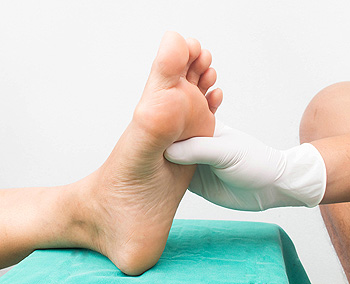
Neuropathy is another word for nerve damage. There are many types of neuropathy with a variety of underlying causes. The most common type of neuropathy seen by podiatrists is diabetic neuropathy. As its name suggests, diabetic peripheral neuropathy is a result of diabetes. High blood sugar levels damage the nerves that supply the feet and lower limbs, leading to symptoms such as burning pain, numbness, tingling, a loss of sensation, muscle weakness, skin discoloration, and a higher chance of diabetic foot ulcers. Diabetic neuropathy can range from mild to severe but tends to worsen if steps aren’t taken to treat it. Your podiatrist can help you manage diabetic neuropathy by monitoring the health of your feet, prescribing orthotics, taking care of any injuries or foot wounds, and much more.
Neuropathy
Neuropathy can be a potentially serious condition, especially if it is left undiagnosed. If you have any concerns that you may be experiencing nerve loss in your feet, consult with Massimo Pietrantoni, DPM from Rochester Podiatry, LLP. Our doctor will assess your condition and provide you with quality foot and ankle treatment for neuropathy.
What Is Neuropathy?
Neuropathy is a condition that leads to damage to the nerves in the body. Peripheral neuropathy, or neuropathy that affects your peripheral nervous system, usually occurs in the feet. Neuropathy can be triggered by a number of different causes. Such causes include diabetes, infections, cancers, disorders, and toxic substances.
Symptoms of Neuropathy Include:
Those with diabetes are at serious risk due to being unable to feel an ulcer on their feet. Diabetics usually also suffer from poor blood circulation. This can lead to the wound not healing, infections occurring, and the limb may have to be amputated.
Treatment
To treat neuropathy in the foot, podiatrists will first diagnose the cause of the neuropathy. Figuring out the underlying cause of the neuropathy will allow the podiatrist to prescribe the best treatment, whether it be caused by diabetes, toxic substance exposure, infection, etc. If the nerve has not died, then it’s possible that sensation may be able to return to the foot.
Pain medication may be issued for pain. Electrical nerve stimulation can be used to stimulate nerves. If the neuropathy is caused from pressure on the nerves, then surgery may be necessary.
If you have any questions, please feel free to contact one of our offices located in Brighton, NY . We offer the newest diagnostic and treatment technologies for all your foot care needs.
Neuropathy is a condition in which the nerves in the body become damaged from a number of different illnesses. Nerves from any part of the body, including the foot, can be damaged. There are several forms of neuropathy including peripheral neuropathy, cranial neuropathy, focal neuropathy, and autonomic neuropathy. Furthermore there is also mononeuropathy and polyneuropathy. Mononeuropathies affect one nerve while polyneuropathies affect several nerves. Causes of neuropathy include physical injury, diseases, cancers, infections, diabetes, toxic substances, and disorders. It is peripheral neuropathy that affects the feet.
The symptoms of neuropathy vary greatly and can be minor such as numbness, sensation loss, prickling, and tingling sensations. More painful symptoms include throbbing, burning, freezing, and sharp pains. The most severe symptoms can be muscle weakness/paralysis, problems with coordination, and falling.
Podiatrists rely upon a full medical history and a neurological examination to diagnose peripheral neuropathy in the foot. More tests that may be used include nerve function tests to test nerve damage, blood tests to detect diabetes or vitamin deficiencies. Imaging tests, such as CT or MRI scans, might be used to look for abnormalities, and finally nerve or skin biopsies could also be taken.
Treatment depends upon the causes of neuropathy. If the neuropathy was caused by vitamin deficiency, diabetes, infection, or toxic substances, addressing those conditions can lead to the nerve healing and sensation returning to the area. However if the nerve has died, then sensation may never come back to the area. Pain medication may be prescribed for less serious symptoms. Topical creams may also be tried to bring back sensation. Electrical nerve stimulation may be used for a period of time to stimulate nerves. Physical therapy can strengthen muscle and improve movement. Finally surgery might be necessary if pressure on the nerve is causing the neuropathy.
If you are experiencing sensation loss, numbness, tingling, or burning sensations in your feet, you may be experiencing neuropathy. Be sure to talk to a podiatrist to be diagnosed right away.

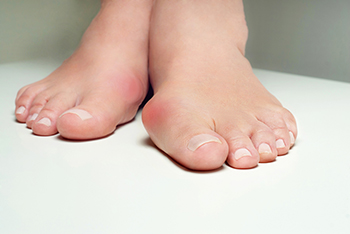 A bunion forms when bones in the front of the foot move and the big toe leans inward towards the smaller toes. The result of this process is a bony bump on the joint at the base of the big toe. The skin over the bump or bunion may be swollen, painful, and red and movement of the big toe may be limited. Bunions are often formed by the inherited structure of one’s foot, a foot problem or injury, or another physical condition, like arthritis. Tight, narrow shoes or high-heeled shoes can irritate bunions and aggravate all symptoms. Bunionettes are smaller bunions that form on the joint of the little toe. Because bunions can lead to other foot conditions, it is important to see a qualified podiatrist for proper diagnosis and treatment.
If you are suffering from bunions, contact Massimo Pietrantoni, DPM of Rochester Podiatry, LLP. Our doctor can provide the care you need to keep you pain-free and on your feet.
What Is a Bunion?
A bunion is formed of swollen tissue or an enlargement of boney growth, usually located at the base joint of the toe that connects to the foot. The swelling occurs due to the bones in the big toe shifting inward, which impacts the other toes of the foot. This causes the area around the base of the big toe to become inflamed and painful.
Why Do Bunions Form?
Genetics – Susceptibility to bunions are often hereditary
Stress on the feet – Poorly fitted and uncomfortable footwear that places stress on feet, such as heels, can worsen existing bunions
How Are Bunions Diagnosed?
Podiatrists often perform two tests – blood tests and x-rays – when trying to diagnose bunions, especially in the early stages of development. Blood tests help determine if the foot pain is being caused by something else, such as arthritis, while x-rays provide a clear picture of your bone structure to your provider.
How Are Bunions Treated?
If you have any questions, please feel free to contact one of our offices located in Brighton, NY . We offer the newest diagnostic and treatment technologies for all your foot care needs.
A bunion is a bump that forms at the base of the big toe. Bunions form when the big toe pushes against the next toe, which forces the big toe joint to get bigger and stick out. As a result, the skin over the bunion may start to appear red and it may feel sore.
There are risk factors that can increase your chances of developing bunions. People who wear high heels or ill-fitting shoes are more likely to develop them, in addition to those who have a genetic history of bunions or have rheumatoid arthritis.
The most obvious way to tell if you have a bunion is to look for the big toe pushing up against the toe next to it. Bunions produce a large protrusion at the base of the big toe and may or may not cause pain. Other symptoms are redness, swelling, and restricted movement of the big toe if you have arthritis.
Nonsurgical methods are frequently used to treat bunions that aren’t severe. Some methods of nonsurgical treatment are orthotics, icing and resting the foot, taping the foot, and pain medication. Surgery is usually only required in extreme cases. However, if surgery is needed, some procedures may involve removing the swollen tissue from around the big toe joint, straightening the big toe by removing part of the bone, or joining the bones of your affected joint permanently.
Your podiatrist will diagnose your bunion by doing a thorough examination of your foot. He or she may also conduct an x-ray to determine the cause of the bunion and its severity.


You don't need an excuse to have beautiful nails. Step outside without worrying about the appearance of your feet.


 accessibility - Default