



A podiatrist’s job focuses on diagnosing, treating, and preventing conditions that affect the feet and ankles. Their work ranges from caring for simple concerns like nail problems, calluses, or heel pain, to managing more complex issues such as fractures, tendon injuries, and chronic conditions that affect mobility. They examine how your feet function, evaluate symptoms, and use diagnostic tools like X-rays or ultrasounds to understand the source of discomfort. Podiatrists also play an important role in long-term health. They provide custom orthotics for support, monitor diabetic foot concerns, treat wounds, and guide patients through recovery after surgery or injury. Education is a major part of their work, helping people make better choices about footwear, activity levels, and overall foot health. When foot or ankle pain interferes with daily life or keeps returning, it is suggested that you see a podiatrist for a proper evaluation and appropriate treatment.
If you are dealing with pain in your feet and ankles, you may want to seek help from a podiatrist. Feel free to contact Massimo Pietrantoni, DPM from Rochester Podiatry, LLP. Our doctor can provide the care you need to keep you pain-free and on your feet.
What Is a Podiatrist?
A podiatrist diagnoses and treats conditions of the foot, ankle, and related structures of the leg. Your podiatrist may specialize in a certain field such as sports medicine, wound care, pediatrics, and diabetic care. Podiatrists have the ability to become board certified through training, clinical experience, and then taking an exam.
What Do Podiatrists Do?
On a daily basis, a podiatrist may perform the following activities:
It is very important that you take care of your feet. It’s easy to take having healthy feet for granted, however foot problems tend to be among the most common health conditions. Podiatrists can help diagnose and treat a variety of feet related conditions, so it is crucial that you visit one if you need assistance.
If you have any questions, please feel free to contact one of our offices located in Brighton, NY . We offer the newest diagnostic and treatment technologies for all your foot care needs.
A podiatrist specializes in foot, ankle, and related structures of the leg. If you are having any pain, injuries, or abnormalities in these areas, it is best that you seek help from a podiatrist.
Podiatrists complete four years of training in a podiatric medical school. Their training is like that of other physicians, and they may go on to complete a fellowship training after a residency training. Some podiatrists are board certified meaning they have advanced training, clinical experience, and have taken an exam to prove their skills. Certifying boards for podiatry are the American Board of Foot and Ankle Surgery and the American Board of Podiatric Medicine. Podiatrists may work in private practices, hospitals, clinics, or they may even become professors at colleges of podiatric medicine.
While in college, those who want to be podiatrists often take biology, chemistry, and physics classes in preparation for podiatry school. In podiatry school, students study how the bones, nerves, and muscles work together to help you move around. Additionally, they study injuries and how to properly diagnose and treat them. Admittance into podiatric medical school requires the completion of 90 semester hours of undergraduate study with a good grade point average, and acceptable scores on the MCAT (Medical College Admission Test)
Podiatrists treat many different conditions such as: aching feet, ankle pain, bunions, corns, hammertoes, fungus, ingrown toenails, plantar fasciitis, sprains and more. Common forms of treatment for these conditions are physical therapy, drugs, or surgery. Podiatrists may also recommend corrective shoe inserts, custom-made shoes, plaster casts, and strappings to correct deformities.
Even if you are someone whose feet are in generally good condition, you should still visit a podiatrist to have your feet properly exfoliated and maintained, or to make sure you are looking after your feet properly.
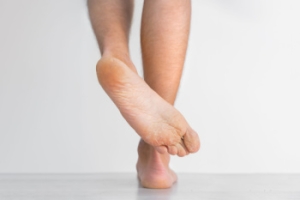
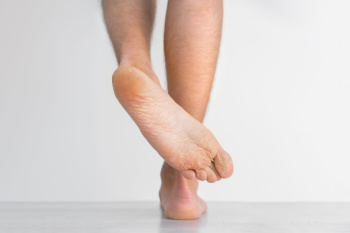
Athlete’s foot is a fungal infection that affects the skin of the feet, especially between the toes and along the soles. It is caused by fungi that thrive in warm, moist environments, including locker rooms, sweaty shoes, and public shower areas. The skin may look red, scaly, or cracked, and in some cases may appear white and soggy between the toes. It often feels itchy, with discomfort that can worsen after activity. Some people also experience dryness or painful fissures. A podiatrist can help from the start by accurately diagnosing the condition and confirming that symptoms are not related to other skin disorders. Treatment may begin with prescriptions or medical grade antifungal therapies, skin care guidance, and hygiene education. Care can then move into preventive strategies, footwear recommendations, and ongoing management to reduce recurrence and protect skin health. If you are dealing with persistent athlete’s foot, it is suggested that you make an appointment with a podiatrist.
Athlete’s foot is an inconvenient condition that can be easily reduced with the proper treatment. If you have any concerns about your feet and ankles, contact Massimo Pietrantoni, DPM from Rochester Podiatry, LLP. Our doctor will treat your foot and ankle needs.
Athlete’s Foot: The Sole Story
Athlete's foot, also known as tinea pedis, can be an extremely contagious foot infection. It is commonly contracted in public changing areas and bathrooms, dormitory style living quarters, around locker rooms and public swimming pools, or anywhere your feet often come into contact with other people.
Solutions to Combat Athlete’s Foot
Athlete’s foot can cause many irritating symptoms such as dry and flaking skin, itching, and redness. Some more severe symptoms can include bleeding and cracked skin, intense itching and burning, and even pain when walking. In the worst cases, Athlete’s foot can cause blistering as well. Speak to your podiatrist for a better understanding of the different causes of Athlete’s foot, as well as help in determining which treatment options are best for you.
If you have any questions please feel free to contact one of our offices located in Brighton, NY . We offer the newest diagnostic and treatment technologies for all your foot and ankle needs.
Athlete’s foot is a type of fungal infection that affects the skin on the feet. It is caused when the tinea fungus grows on the foot. It is possible to catch the fungus through direct contact with someone who has it or by touching a surface that is contaminated with it. This type of fungus thrives in warm, moist environments such as showers, locker room floors, and swimming pools. Your risk of getting it may also increase by wearing tight-fitting, closed-toe shoes, or by having sweaty feet.
Symptoms of athlete’s foot include itching, stinging or burning sensations between the toes. You may also experience toenails that are discolored, thick, crumbly, or toenails that pull away from the nail bed.
Your podiatrist may diagnose athlete’s foot by detecting these symptoms or by doing a skin test to see if there is a fungal infection present. The most common exam used to detect Athlete’s foot is a skin lesion potassium hydroxide exam. To use this method, your doctor will scrape off a small area of the infected skin and place it into potassium hydroxide. The potassium hydroxide will destroy the normal cells and leave the fungal cells untouched so that they are visible under a microscope.
There are a variety of treatment options for athlete’s foot. Some medications are miconazole (Desenex), terbinafine (Lamisil AT), clotrimazole (Lotrimin AF), butenafine (Lotrimin Ultra), and tolnaftate (Tinactin). While these options may be able to treat your fungus, it is best that you consult with a podiatrist in order to see which treatment option may work best for you.
In some cases, Athlete’s foot may lead to complications. A severe complication would be a secondary bacterial infection which may cause your foot to become swollen, painful, and hot.
There are ways that you can prevent athlete’s foot. Washing your feet with soap and water each day and drying them thoroughly is an effective way to prevent infections. You also shouldn’t share socks, shoes, or towels with other people. It is crucial that you wear shower sandals in public showers, around swimming pools, and in other public places. Additionally, you should make sure you wear shoes that can breathe and change your socks when your feet become sweaty. If you suspect that you have Athlete’s foot, you should seek help from a podiatrist as soon as possible.
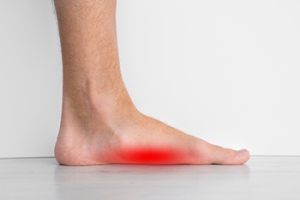

Flat feet occur when the arch does not lift properly, causing the entire sole to touch the ground and placing extra pressure on the feet and ankles. This can begin in childhood or develop later from tendon problems like a tight Achilles tendon or weakness along the inside of the ankle. People with flat feet may feel aching in the arches, stiffness, or fatigue after long periods of walking or standing. Some notice the ankles leaning inward or calluses forming from added friction. A podiatrist can evaluate the arch, check tendon strength, and determine how the flat feet affect foot movement. Treatment options include orthotics to support the arch, improve alignment, and reduce strain, along with guidance on shoe choices. The podiatrist can also discuss surgery if the bones or tendons need correction. If you have foot problems related to flat feet, it is suggested that you make an appointment with a podiatrist for a diagnosis and treatment.
Flatfoot is a condition many people suffer from. If you have flat feet, contact Massimo Pietrantoni, DPM from Rochester Podiatry, LLP. Our doctor will treat your foot and ankle needs.
What Are Flat Feet?
Flatfoot is a condition in which the arch of the foot is depressed and the sole of the foot is almost completely in contact with the ground. About 20-30% of the population generally has flat feet because their arches never formed during growth.
Conditions & Problems:
Having flat feet makes it difficult to run or walk because of the stress placed on the ankles.
Alignment – The general alignment of your legs can be disrupted, because the ankles move inward which can cause major discomfort.
Knees – If you have complications with your knees, flat feet can be a contributor to arthritis in that area.
Symptoms
Treatment
If you are experiencing pain and stress on the foot you may weaken the posterior tibial tendon, which runs around the inside of the ankle.
If you have any questions, please feel free to contact one of our offices located in Brighton, NY . We offer the newest diagnostic and treatment technologies for all your foot care needs.
Flatfoot is classified as having the entire sole of the foot in contact or near contact to the ground while standing. The disorder is also known as fallen arches, because those affected have no arch in their feet. Flexible flatfoot and rigid flatfoot are the two types of flatfoot.
A person has flexible flatfoot if when sitting or standing on their toes, they have an arch that disappears when they stand with the entire foot on the ground. Flexible flatfoot may also be called “pediatric flatfoot” because the condition first appears in childhood. It is common among infants because the arch does not develop until the age of 5 or 6 years. Rigid flatfoot is not as common in children as it is with adults. This type of flatfoot is developed due to the weakening of tibialis posterior muscle tendon, a major supporting structure of the foot arch. Development of this deformity is progressive and shows early signs of pain and swelling that begins at the inside arch of the foot and moves to the outside of the foot below the ankle. More severe cases can possibly lead to arthritis of the foot and ankle joints.
Although most cases of flatfoot involve people born with the condition, some less common causes are obesity, diabetes, pregnancy, and osteoporosis. In some cases, flatfoot may come with no symptoms at all and does not require any type of treatment. With other cases though, symptoms may include pain in the shin, knee, hips and lower back. If a person with flatfeet experiences such symptoms, a health care provider may suggest using orthotic devices or arch supports, which may reduce the pain. Wearing supportive shoes can also prove more comfortable with flatfeet and staying away from shoes with little support such as sandals. Other methods to relieve pain also include stretching the Achilles tendon properly and using proper form when doing any physical activity. In addition, losing weight can reduce the stress on your feet and reduce the pain.


Walking and running shoes are designed differently to match how the feet move during each activity. Walking shoes usually have a flatter shape with flexible soles that support a smooth heel to toe motion. Running shoes are often more curved and lightweight to absorb higher impact forces. Support also varies, as walking shoes focus on stability, while running shoes provide added structure to control motion during faster strides. Cushioning is typically firmer in walking shoes, while running shoes offer more shock absorption to protect joints from repeated impact. Choosing the wrong shoe can lead to foot, ankle, or knee discomfort. A podiatrist can help by evaluating gait, foot structure, and activity level to recommend proper footwear or custom orthotics. If foot pain or fatigue occurs during walking or running, it is suggested that you consult a podiatrist who can treat various foot conditions, and guide you on the correct shoes to wear for your desired activity.
For more information about walking shoes versus running shoes, consult with Massimo Pietrantoni, DPM from Rochester Podiatry, LLP. Our doctor can measure your feet to determine what your needs are and help you find an appropriate pair of footwear.
Foot Health: The Differences between Walking & Running Shoes
There are great ways to stay in shape: running and walking are two great exercises to a healthy lifestyle. It is important to know that running shoes and walking shoes are not interchangeable. There is a key difference on how the feet hit the ground when someone is running or walking. This is why one should be aware that a shoe is designed differently for each activity.
You may be asking yourself what the real differences are between walking and running shoes and the answers may shock you.
Differences
Walking doesn’t involve as much stress or impact on the feet as running does. However, this doesn’t mean that you should be any less prepared. When you’re walking, you land on your heels and have your foot roll forward. This rolling motion requires additional support to the feet.
Flexibility – Walking shoes are designed to have soft, flexible soles. This allows the walker to push off easily with each step.
If you have any questions, please feel free to contact one of our offices located in Brighton, NY . We offer the newest diagnostic and treatment technologies for all your foot care needs.
Although walking shoes and running shoes look similar, they have characteristics that make them different from each other. Runners should avoid running in walking shoes and vice versa. It is very important that you wear the proper footwear for the activity you are going to partake in, for you to avoid injury.
If you are looking to buy a new pair of running shoes, there are certain things you should look out for. One of the main components that makes up a good running shoe is flexibility. You should be able to bend and flex the forefoot of the shoe that you are purchasing. If you can bend the entire shoe in half with ease, this is a sign that the shoe does not have enough structure for your feet. Another feature you should look for is a low heel. Certain running shoes have a low heel to support runners who land on the ball of their feet. Lastly, you should look for the fit of the running shoe. You should visit the best running shoe store in your area to have your feet properly sized for the shoes in the store. Usually, the staff will be able to help recommend the best type of running shoe for your needs.
When you are walking, the body’s weight is evenly distributed on the foot. This influences the design of shoes made for walking. If you are looking to buy a pair of walking shoes, there are different features you should look for to determine which pair of shoes is best for you. Walking shoes should be flexible through the ball of the foot to allow for a greater range of motion through the roll of the forefoot. These shoes also should have greater arch support for the foot. If you plan on walking long distances or on hard surfaces, it is best that you wear shoes that have cushioning.
When trying on a new pair of shoes, the heel should fit snugly without slip. You should shop for shoes after a long walk, since your feet tend to swell throughout the day. Many people have one foot that is a different size than the other, so it is best that you have both feet measured when looking for your true size. You should also beware that sizes vary depending on the shoe brand. A certain size in one brand may be a different size in a different brand. Lastly, you should always walk around in shoes that you plan on buying. This will help you determine whether the shoes are comfortable and if they fit well on your feet.
Always look for good shoe construction when shopping for new sneakers. The upper part of the shoe should allow for adjustment through laces or straps. If you need help with shoe sizing or if you need custom orthotics for your feet, you should make an appointment with your podiatrist for assistance. He or she will be more than happy to help you with your shoe sizing needs.


Have your child's feet been examined lately? Healthy feet are happy feet. If your child is complaining of foot pain, it may be a sign of underlying problems.


With age, feet lose protective padding, circulation weakens, and skin becomes fragile, making older adults more likely to develop foot wounds that linger. Even a small blister, scrape, or callus can evolve into a stubborn sore when blood flow or sensation is reduced. Chronic wounds may be painful or slow to close, and infection can spread quickly, if not addressed early. These sores often signal underlying conditions such as diabetes, vein disease, or poor mobility. Treatment focuses on restoring circulation, protecting the area from pressure, and keeping the wound clean and moist to support healing. A podiatrist may use advanced dressings, gentle debridement, or custom orthotics to relieve pressure and prevent recurrence. Early attention is vital to preserve comfort and mobility. If you have a foot wound that has not improved within a couple of weeks, it is suggested that you visit a podiatrist for a professional assessment and care.
If you need your feet checked, contact Massimo Pietrantoni, DPM of Rochester Podiatry, LLP. Our doctor will attend to all of your foot and ankle needs and provide you with quality treatment.
Geriatrics and Podiatry
When people age, some common issues that may occur are bone density loss, dry skin, poor circulation, and rough brittle nails. These issues may also affect your foot health if the necessary steps are not taken to alleviate the problems.
It is important to take care of your feet because feet that are injured or diseased can affect your overall health. Having painful feet hinders your ability to do daily activities or may decrease your willingness to do the things that you need to do.
Visiting Your Geriatrician
As we age, health problems become more likely, so it is essential to visit your doctor for check-ups to ensure that you are doing the best you can to take care of your health. It is recommended to check your feet frequently for any possible cuts, bruises, swelling, corns or any other irregularities.
Taking Care of Elderly Feet
Cracked or dry feet can be treated by applying moisturizer often. It is also important not to wear old socks because the older the sock is, the higher the possibility there will be that there is bacteria there. Wear fresh socks and make sure they fit properly.
Proper foot health means that you can have a more active lifestyle and you will not be bogged down by pain. Foot health also leads to good circulation, which is paramount for overall health.
If you have any questions, please feel free to contact one of our offices located in Brighton, NY . We offer the newest diagnostic and treatment technologies for all your foot care needs.


 accessibility - Default