

You don't need an excuse to have beautiful nails. Step outside without worrying about the appearance of your feet.

New shoes and busy days on the move can lead to painful blisters, especially at the start of the school year. Blisters form when friction or moisture causes the skin to rub repeatedly, creating fluid-filled pockets that make walking uncomfortable. To prevent them, shoes should fit properly with enough room for toes to move, and socks should be moisture-wicking to keep feet dry. Breaking in new shoes gradually helps the skin to adapt, reducing irritation. Students who participate in sports should make sure their athletic shoes offer good support, and are replaced when worn out. If a blister does form, it is best to keep it clean, covered, and protected until it heals naturally. If you are a parent with school-age children, it is suggested that you help your children avoid painful foot problems by scheduling a podiatry visit before the school year begins to ensure proper shoe fit and foot health.
Blisters are prone to making everyday activities extremely uncomfortable. If your feet are hurting, contact Massimo Pietrantoni, DPM of Rochester Podiatry, LLP. Our doctor can provide the care you need to keep you pain-free and on your feet.
Foot Blisters
Foot blisters develop as a result of constantly wearing tight or ill-fitting footwear. This happens due to the constant rubbing from the shoe, which can often lead to pain.
What Are Foot Blisters?
A foot blister is a small fluid-filled pocket that forms on the upper-most layer of the skin. Blisters are filled with clear fluid and can lead to blood drainage or pus if the area becomes infected.
How Do Blisters Form?
Blisters on the feet are often the result of constant friction of skin and material, usually by shoe rubbing. Walking in sandals, boots, or shoes that don’t fit properly for long periods of time can result in a blister. Having consistent foot moisture and humidity can easily lead to blister formation.
Prevention & Treatment
It is important to properly care for the affected area in order to prevent infection and ease the pain. Do not lance the blister and use a Band-Aid to provide pain relief. Also, be sure to keep your feet dry and wear proper fitting shoes. If you see blood or pus in a blister, seek assistance from a podiatrist.
If you have any questions, please feel free to contact one of our offices located in Brighton, NY . We offer the newest diagnostic and treatment technologies for all your foot care needs.

Plantar heel pain affects people of all ages, especially those who spend long hours on their feet. It is often caused by inflammation of the plantar fascia, a thick band of tissue that runs along the bottom of the foot, connecting the heel bone to the toes. Symptoms include sharp or aching pain in the heel, especially with the first steps in the morning or after long periods of rest. The area may appear swollen or feel tender to the touch. This condition can be triggered by wearing improper footwear, obesity, overuse, flat feet, or high arches. A podiatrist can assist in accurately diagnosing the cause through a physical exam, imaging, and gait analysis. Treatment may include custom orthotics, stretching exercises, anti-inflammatory medication, or night splints. In more severe cases, advanced interventions may be recommended. If you have heel pain, It is suggested that you schedule an appointment with a podiatrist for effective relief and personalized care.
Many people suffer from bouts of heel pain. For more information, contact Massimo Pietrantoni, DPM of Rochester Podiatry, LLP. Our doctor can provide the care you need to keep you pain-free and on your feet.
Causes of Heel Pain
Heel pain is often associated with plantar fasciitis. The plantar fascia is a band of tissues that extends along the bottom of the foot. A rip or tear in this ligament can cause inflammation of the tissue.
Achilles tendonitis is another cause of heel pain. Inflammation of the Achilles tendon will cause pain from fractures and muscle tearing. Lack of flexibility is also another symptom.
Heel spurs are another cause of pain. When the tissues of the plantar fascia undergo a great deal of stress, it can lead to ligament separation from the heel bone, causing heel spurs.
Why Might Heel Pain Occur?
Treatments
Heel pain should be treated as soon as possible for immediate results. Keeping your feet in a stress-free environment will help. If you suffer from Achilles tendonitis or plantar fasciitis, applying ice will reduce the swelling. Stretching before an exercise like running will help the muscles. Using all these tips will help make heel pain a condition of the past.
If you have any questions, please feel free to contact one of our offices located in Brighton, NY . We offer the newest diagnostic and treatment technologies for all your foot care needs.

Pain in the ball of the foot, often called metatarsalgia, can develop from a range of conditions that place strain on the forefoot. The most common causes are bunions, which shift the alignment of the big toe and change how weight is distributed, and Morton’s neuroma, where tissue thickens around a nerve between the toes and produces burning or tingling sensations. Injuries such as sprains or more severe Lisfranc injuries involving torn ligaments or broken bones in the midfoot can also lead to significant discomfort in the ball of the foot. Some patients may notice numbness or sharp pain that spreads into the toes. A podiatrist can assess the source of the pain with a physical exam and imaging, provide proper treatment, and in advanced cases recommend surgery to restore stability and function. If you have pain in the ball of the foot, it is suggested that you make an appointment with a podiatrist for an exam and treatment.
Foot Pain
Foot pain can be extremely painful and debilitating. If you have a foot pain, consult with Massimo Pietrantoni, DPM from Rochester Podiatry, LLP. Our doctor will assess your condition and provide you with quality foot and ankle treatment.
Causes
Foot pain is a very broad condition that could be caused by one or more ailments. The most common include:
Diagnosis
To figure out the cause of foot pain, podiatrists utilize several different methods. This can range from simple visual inspections and sensation tests to X-rays and MRI scans. Prior medical history, family medical history, and any recent physical traumatic events will all be taken into consideration for a proper diagnosis.
Treatment
Treatment depends upon the cause of the foot pain. Whether it is resting, staying off the foot, or having surgery; podiatrists have a number of treatment options available for foot pain.
If you have any questions, please feel free to contact one of our offices located in Brighton, NY . We offer the newest diagnostic and treatment technologies for all your foot care needs.
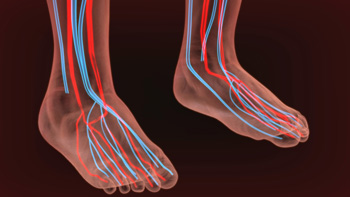 The condition that is known as peripheral artery disease (PAD) can be a result of restricted blood flow to the arteries. This can occur due to a cholesterol disease, or if scar tissue has developed. PAD can cause the feet to have tingling or numbing sensations, and it may make it difficult to feel existing cuts or bruises on the feet. Research has indicated that it is beneficial to perform gentle foot and leg stretches, as this may help to improve circulation. Additionally, it can help to maintain healthy eating habits which often include drinking plenty of water. If your feet feel numb, you may have PAD, and it is strongly suggested that you seek the care of a podiatrist who can properly diagnose and treat this condition.
Peripheral artery disease can pose a serious risk to your health. It can increase the risk of stroke and heart attack. If you have symptoms of peripheral artery disease, consult with Massimo Pietrantoni, DPM from Rochester Podiatry, LLP. Our doctor will assess your condition and provide you with quality foot and ankle treatment.
Peripheral artery disease (PAD) is when arteries are constricted due to plaque (fatty deposits) build-up. This results in less blood flow to the legs and other extremities. The main cause of PAD is atherosclerosis, in which plaque builds up in the arteries.
Symptoms
Symptoms of PAD include:
It is important to note that a majority of individuals never show any symptoms of PAD.
Diagnosis
While PAD occurs in the legs and arteries, Podiatrists can diagnose PAD. Podiatrists utilize a test called an ankle-brachial index (ABI). An ABI test compares blood pressure in your arm to you ankle to see if any abnormality occurs. Ultrasound and imaging devices may also be used.
Treatment
Fortunately, lifestyle changes such as maintaining a healthy diet, exercising, managing cholesterol and blood sugar levels, and quitting smoking, can all treat PAD. Medications that prevent clots from occurring can be prescribed. Finally, in some cases, surgery may be recommended.
If you have any questions, please feel free to contact one of our offices located in Brighton, NY . We offer the newest diagnostic and treatment technologies for all your foot care needs.

Do you suffer from heel pain when you get up in the morning? If so, you should seek professional help and have a proper diagnosis performed. Heel pain can be caused by several different foot-related conditions.


 accessibility - Default